
Comprehensive Operational and Strategic Assessment of Makkah Concorde Hotel for NewHaj.com: Infrastructure, Logistics, and Market Positioning
1. Executive Summary and Strategic Positioning
The sacred city of Makkah Al-Mukarramah is experiencing a monumental transformation, fueled by the Kingdom of Saudi Arabia’s ambitious Vision 2030, which aims to host 30 million pilgrims annually for Hajj and Umrah. This vision has reshaped the urban landscape, dramatically increasing the strategic importance of districts beyond the immediate Grand Mosque (Haram) vicinity, particularly Al Aziziyah. Once considered a peripheral support area, Al Aziziyah has evolved into a pivotal accommodation hub, offering a unique blend of accessibility, affordability, and critical logistical advantages, especially during the demanding Hajj season.
Within this dynamic environment, the Makkah Concorde Hotel presents a compelling case study for the newhaj.com platform. Strategically located as a 4-star establishment on the bustling King Abdul Aziz Road, the hotel is a key node in Makkah’s expansive accommodation network. It adeptly caters to a broad spectrum of pilgrims, from those performing Umrah on a budget to large Hajj groups for whom proximity to the Jamarat complex in Mina is a top priority. The hotel’s operational model is characterized by its substantial inventory of 482 rooms, its reliance on a dedicated shuttle service for connectivity to the Grand Mosque, and its seamless integration into the vibrant commercial fabric of the Aziziyah district.
1.1 Core Value Proposition for NewHaj.com
For users of newhaj.com, the Makkah Concorde Hotel offers a strategic accommodation option that warrants a nuanced and detailed presentation. It transcends the basic function of lodging, serving instead as a vital logistical base for pilgrims. Our analysis reveals the property’s primary strength lies in its dual utility: it functions exceptionally well as a dormitory-style hub during Hajj, largely due to its advantageous walkability to Mina, while transitioning into a value-oriented 4-star residence during the Umrah season. This is bolstered by essential amenities such as complimentary parking and its immediate proximity to community mosques like the Fakih Mosque.
However, a thorough assessment also illuminates critical operational constraints that newhaj.com must transparently communicate to potential guests. Policies such as the strict “no extra bed” rule, the specific logistics of the shuttle drop-off at Misfalah Kubra, and the fixed check-in/check-out windows are integral to shaping the guest experience. This comprehensive report provides an exhaustive evaluation of these elements, empowering newhaj.com to offer its users an accurate, detailed, and expert-level perspective on the Makkah Concorde Hotel, ensuring pilgrims make well-informed decisions tailored to their unique needs.
2. Geospatial Analysis and Urban Context: The Al Aziziyah District
To truly grasp the operational realities and strategic value of the Makkah Concorde Hotel, one must first understand its location within the broader urban and spiritual landscape of Makkah. The Al Aziziyah district holds a distinct character, differentiating it from the more centrally located and vertically dense areas like Ajyad or Ibrahim Al Khalil.
2.1 The Strategic Significance of Al Aziziyah
Al Aziziyah is a linear district that runs parallel to the sacred Mina valley, effectively serving as a critical gateway between the Holy City’s residential zones and its most significant holy sites. The Makkah Concorde’s position on King Abdul Aziz Road, a major arterial thoroughfare connecting the city center to the Taif highway, is by no means coincidental. This placement situates the hotel directly on a primary logistical artery, a fact with profound implications for pilgrims:
- During Hajj: The district undergoes a profound transformation into a pedestrian-heavy zone. The hotel’s location offers an unparalleled advantage, allowing pilgrims the crucial option of walking to the Jamarat (the stoning pillars) in Mina. While approximately a 15-minute drive under normal conditions, during the peak Hajj days, this walkability becomes a premium feature, as vehicular movement is frequently restricted or entirely paralyzed by severe congestion. This direct access is particularly critical during the “Days of Tashreeq,” when pilgrims frequently travel between their accommodation and the Jamarat.
- During Umrah: The wide avenues of Aziziyah offer significantly easier bus access compared to the often-choked, narrow streets of the central Haram zone. This facilitates smoother pick-up and drop-off operations for large tour groups arriving from Jeddah or Madinah, minimizing transit delays.
2.2 Proximity Mapping and Distance Analysis
Understanding the precise distances from the Makkah Concorde Hotel to key religious and infrastructural landmarks is paramount for any pilgrim planning their journey. The following table provides a clear logistical picture:
| Landmark | Distance | Logistical Implication |
|---|---|---|
| Masjid Al-Haram (The Grand Mosque) | ~4.5 km | Requires vehicular transport; not practical for daily walking to all prayers. |
| The Holy Kaaba | ~4.0 — 4.5 km | Accessible via shuttle/taxi to the outer perimeter, then a short walk. |
| Mina (Holy Site) | ~0.5 km (Boundary) | Extremely close; provides highly advantageous logistics for Hajj rituals. |
| Jamarat (Stoning Pillars) | ~1.3 km — 2.5 km | Walkable for fit pilgrims; absolutely critical for the performance of Hajj rituals. |
| Fakih Mosque | ~150 meters | Immediate neighborhood mosque for daily congregational prayers. |
| Makkah Mall | ~2.1 km | Close proximity to major retail, dining, and entertainment options. |
| Al Haramin Train Station (Mina 1) | ~6.0 km | Connects to the High-Speed Railway network for inter-city travel. |
| Jabal Thawr | ~3.8 km | Requires taxi or private transport for Ziyarat (visitation). |
2.3 Neighborhood Ecosystem
The immediate vicinity of the Makkah Concorde Hotel fosters a self-sufficient ecosystem, significantly reducing a pilgrim’s dependency on the central Haram area for daily necessities and spiritual fulfillment.
- Religious Infrastructure: The Fakih Mosque, a substantial congregational mosque, is conveniently located just a 5-minute walk from the hotel. This is a significant operational asset, especially for elderly guests or those with mobility challenges who may find commuting to the Haram for all five daily prayers strenuous. Having a large, accessible mosque nearby ensures their spiritual obligations can be met with ease and comfort.
- Commercial Amenities: The presence of Al Noori Supermarket and the renowned Al Baik Restaurant within the Aziziyah district means guests have immediate access to essential supplies, groceries, and affordable, high-quality food options. This convenience is particularly valuable for budget-conscious travelers who may find dining prices in the luxury hotels near the Clock Tower prohibitively expensive.
- Green Spaces: For a rare moment of respite in Makkah’s often arid urban landscape, Alkhatateen Park is approximately a 10-minute ride from the hotel, offering a green escape for relaxation.
3. Property Infrastructure and Architectural Profile
The Makkah Concorde Hotel is more than just an accommodation; it is a meticulously designed facility geared towards supporting the unique needs of pilgrims. Its infrastructure and architectural profile are key indicators of its operational capacity and service standards.
3.1 Classification and Brand Standards
Officially classified as a 4-star establishment, the Makkah Concorde Hotel adheres to a specific set of service standards prevalent within the Saudi hospitality market. This classification typically guarantees:
- 24-Hour Reception: Essential for the continuous flow of pilgrim arrivals and departures at all hours.
- Ensuite Facilities: Private bathrooms are provided in every room, ensuring comfort and privacy.
- On-Site Dining: A full-service restaurant is available, capable of managing large-scale operations like daily breakfast buffets.
- Housekeeping: Guests can expect daily cleaning services and the consistent provision of fresh linens and toiletries.
The “Concorde” brand operates several properties across the region, including the Mina Concorde and Bab Al Multazam Concorde. This chain operation suggests a robust, centralized management structure, which typically ensures consistency in procurement, staff training, and maintenance protocols. This centralized approach often translates into greater reliability and service quality compared to standalone, unbranded hotels in the same district.
3.2 Building Capacity and Scale
The hotel is a substantial high-rise structure, featuring an impressive 482 rooms spread across 10 floors. This significant scale dictates many aspects of its operational character:
- Elevator Logistics: With nearly 500 rooms, the vertical transport system (elevators) naturally becomes a critical choke point, especially during peak prayer times (e.g., before Friday prayers or during the holy month of Ramadan). Demand on elevators spikes considerably. While specific data on the number of elevator shafts is not detailed, 4-star standards generally mandate a ratio sufficient to prevent excessive wait times. Nonetheless, guests on higher floors should prudently budget extra time for descent during these busy periods.
- Lobby Dynamics: The hotel’s lobby functions as the central staging area for shuttle departures and guest arrivals. The presence of the Macchiato Café adjacent to the reception provides a convenient waiting area where large groups can congregate comfortably before boarding buses. The design of the lobby likely prioritizes durability, spaciousness, and efficient flow management to effectively handle the influx and egress of numerous guests and their luggage.
3.3 Parking Infrastructure
A distinctive and highly advantageous feature of the Makkah Concorde Hotel is its provision of free self-parking. In a city where parking space is a premium commodity—often carrying exorbitant fees, particularly near the Haram—this facility represents a significant value-add.
- Target Audience Implication: This amenity makes the hotel an ideal choice for residents of Saudi Arabia (both citizens and expatriates) who opt to drive to Makkah for Umrah from cities like Jeddah, Riyadh, or Dammam. It allows them to securely park their private vehicles and then conveniently utilize the hotel’s shuttle service or local taxis for the final leg to the Haram, thereby bypassing the stringent traffic restrictions and costly parking fees associated with the central zone.
4. Accommodation Analysis: Room Features and Configurations
The Makkah Concorde Hotel’s accommodation options are designed to maximize occupancy while ensuring a comfortable and practical stay for pilgrims. The meticulous attention to room features and configurations directly impacts the guest experience.
4.1 Room Inventory and Typology
The hotel’s extensive inventory of 482 rooms is strategically designed to cater to various group sizes and preferences. The booking requirements, which specifically request “Room Type” and “Number of Rooms,” indicate a diverse range of configurations likely to include:
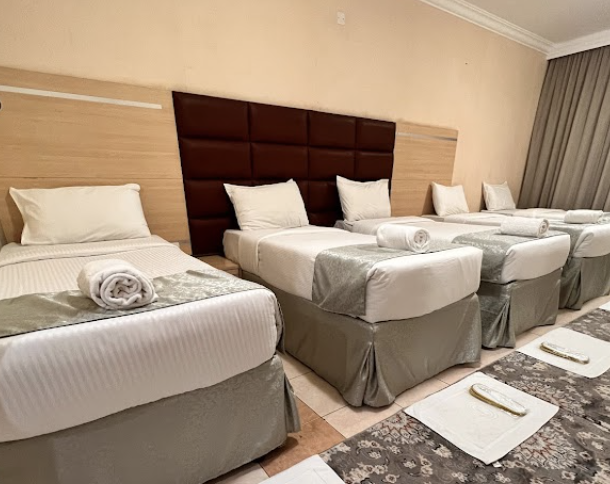
- Twin Rooms: Furnished with two single beds, these are standard and ideal for pairs of pilgrims or individual travelers.
- Triple Rooms: Featuring three single beds, these are a common choice for small families or groups of three, offering a balance of space and cost-efficiency.
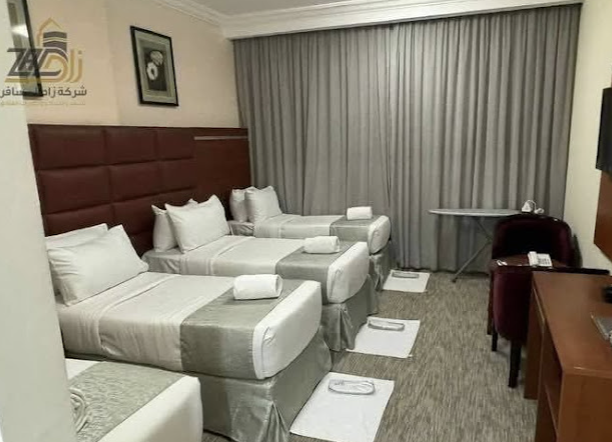
- Quadruple Rooms: Equipped with four single beds, these rooms are highly popular among larger groups, enabling them to significantly reduce the per-person cost of accommodation.
The interior design of the rooms is characterized by functionality and comfort, typically featuring carpeted floors, heavy drapery for effective light control (essential for daytime rest after night prayers or extended worship sessions), and a calming, neutral color palette that promotes relaxation.
4.2 In-Room Amenities and Technology
The array of in-room amenities reflects a keen understanding of the practical needs of the modern pilgrim:
- Climate Control: Each room is equipped with individual air conditioning units. Given Makkah’s desert climate, where temperatures frequently soar above 40°C (104°F), a robust and reliable HVAC system is not merely a convenience but a non-negotiable necessity for guest comfort. Guest reviews generally confirm the functionality of the AC, a critical component of overall satisfaction.
- Digital Connectivity: Complimentary Wi-Fi access is available throughout the entire property. For international pilgrims, reliable internet access is a crucial lifeline for connecting with family back home, as well as a vital tool for navigating religious rituals and accessing spiritual resources via mobile applications. However, it’s worth noting that bandwidth in large hotels can occasionally experience limitations during periods of peak occupancy.
- Entertainment: Rooms are furnished with flat-screen TVs offering a selection of satellite channels. A particularly relevant feature for hotels in Makkah is the inclusion of a live broadcast channel of the Holy Mosque, allowing guests to listen to the Adhan (call to prayer) and observe the prayers live from the comfort and privacy of their rooms.
- Refreshment Center: Each room includes a mini-fridge bar and an electric kettle, complete with tea and coffee making facilities. This thoughtful provision allows guests to prepare simple hot drinks or store cold water and light snacks, essential for hydration and minor refreshments throughout their stay.
4.3 Furnishing and Layout
Beyond the basic amenities, the furnishing and layout of Concorde rooms offer enhanced comfort and practicality:
- Sitting Area: Unlike more basic budget hotels that often maximize bed space at the expense of other functions, Concorde rooms are noted to include a dedicated sitting area. This provides vital additional space within the room for prayer, comfortable dining, or simply decompressing and relaxing without having to sit on the bed.
- Ironing Facilities: The thoughtful inclusion of an iron and ironing board directly in the room is a significant convenience. Pilgrims frequently need to maintain the pristine condition of their Ihram garments or formal wear for Friday prayers, and having in-room facilities avoids the delay, inconvenience, and cost associated with external laundry services.
4.4 Sanitary Facilities
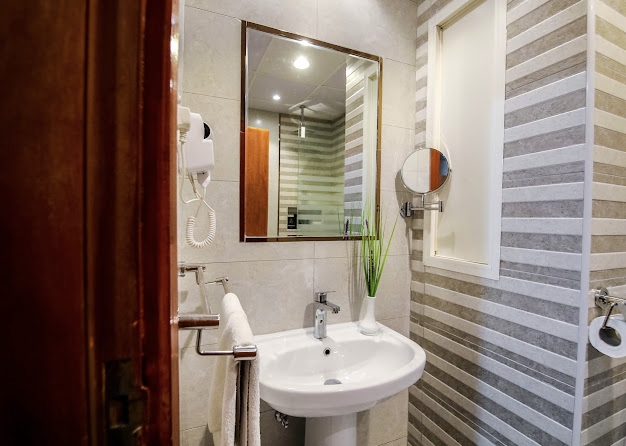
The bathrooms are well-appointed, featuring separate toilets and showers. This configuration is often preferred by international travelers for reasons of hygiene and convenience. Complimentary toiletries are standard. The plumbing infrastructure in Makkah hotels undergoes rigorous testing due to high usage; the 4-star rating suggests a robust maintenance schedule to keep these facilities fully functional, although occasional wear and tear is common in high-traffic properties.
4.5 The “No Extra Bed” Policy: A Critical Constraint
A crucial detail highlighted in the research is the hotel’s strict policy: “There are no extra beds provided in a room. There are no cots provided in a room.” This policy is absolute and carries significant operational implications for guests:
- Operational Implication: This policy means there is no flexibility. A family of three cannot, for example, book a double room and expect to comfortably accommodate a child on a rollaway bed or cot.
- Booking Strategy: Guests must meticulously calculate and book the exact number of beds required for their group. If a family consists of three adults and one child (especially if the child is aged 10 or older, often considered an adult by hotel policies), they will likely need to book two separate rooms or a Quad room, if available, to comply with this regulation. This policy directly impacts cost calculations and must be clearly highlighted on newhaj.com to prevent check-in disputes and ensure a smooth arrival experience for pilgrims.
5. Logistics and Connectivity: The Transport Ecosystem
For a hotel positioned approximately 4.5 km from the Haram, the efficiency and reliability of its transportation system are the single most significant determinants of overall guest satisfaction. The Makkah Concorde operates within a complex logistical framework that encompasses private shuttles, burgeoning public transit options, and essential pedestrian routes.
5.1 The Private Shuttle Service
The hotel proudly offers a “Free shuttle service,” which serves as the primary lifeline for guests performing Umrah or making their daily prayers at the Grand Mosque.
- Vehicle Type: Typically, hotels in this service category utilize “Coaster” buses, which are medium-sized vehicles accommodating approximately 20-30 seats.
- Frequency: While specific schedules are not detailed in the available information, standard industry practice for hotels in the Aziziyah district involves shuttles running continuously or with a high frequency (e.g., every 15-30 minutes) during peak prayer times. However, off-peak frequency may be reduced.
- Reliability: Guest feedback on shuttle services in Makkah is historically varied. Reviews for the Makkah Concorde have ranged from critical mentions of “shuttle service was poor” to more neutral observations. It is imperative to understand that “poor” often relates to systemic issues in Makkah, such as severe overcrowding during Ramadan or traffic delays inherent to the city’s infrastructure, rather than solely hotel mismanagement.
5.2 The Misfalah Kubra Drop-Off Point
A pivotal insight from the research underscores the standardization of shuttle routes by Saudi authorities. The Makkah Concorde shuttle, like most small hotel shuttles operating from Aziziyah, almost certainly utilizes the Misfalah Kubra (Misfalah Bridge) as its designated drop-off point. This fact is crucial for managing pilgrim expectations.
- The “Last Mile” Challenge: The drop-off at Misfalah is not directly at the Haram gates. From this parking area, pilgrims must undertake a walk of approximately 10 to 12 minutes to reach the Grand Mosque courtyard.
- Route Details: This walk involves navigating a section of Hijrah Road. While the path is paved, generally well-lit, and considered safe, it is entirely exposed to the elements.
- Physical Demands: A 12-minute walk may seem inconsequential to a fit individual. However, in the intense midday heat of Makkah, or for an elderly pilgrim with pre-existing knee issues or other physical limitations, it represents a significant exertion. This is a critical “Know Before You Go” detail for newhaj.com. Guests with limited mobility should be explicitly advised that the hotel shuttle service does not provide door-to-door access directly to the Mosque gates, and alternative arrangements (e.g., private taxis closer to the Haram) may be necessary for them.
5.3 Public Transportation Integration (Makkah Bus)
The recent launch of the Royal Commission for Makkah City and Holy Sites (RCMC) Bus Project offers a robust and modern alternative to private hotel shuttles, greatly enhancing connectivity.
- Bus Stop 171: The Makkah Concorde Hotel is conveniently located near the Azizyah 171 bus stop, integrating it into this new public transport network.
- The Advantage: These public buses are large, modern, wheelchair-accessible, and fully air-conditioned. Crucially, they operate on dedicated lanes in some parts of the city, which can enable them to bypass traffic congestion that often plagues private shuttles.
- Cost: Fares for the Makkah Bus are nominal (typically SAR 4), making this a highly affordable and viable backup option if the hotel shuttle is full, experiences delays, or is operating off-schedule.
5.4 Rail Connectivity
The hotel is situated relatively close to key rail infrastructure, which primarily serves during specific seasons or for inter-city travel.
- Metro Usage: The Al Mashaaer Metro Station (Jamarat/Mina 3) is approximately 1 km away. However, it is essential to note that this metro line is predominantly operational only during the 5 days of Hajj, providing essential pilgrim movement between holy sites. For the remainder of the year, it is not a standard mode of transport for daily prayers.
- High-Speed Rail: The Al Haramin “Mina 1” Train Station is approximately 6 km from the hotel. Its proximity is relevant for pilgrims arriving or departing from Jeddah Airport or Madinah via the high-speed rail network, though a taxi transfer would still be required to reach the hotel.
5.5 Traffic Patterns and Seasonality
Understanding Makkah’s unique traffic patterns is crucial for managing travel expectations:
- Ramadan & Hajj: During these absolute peak seasons, King Abdul Aziz Road, like most major arteries, becomes extremely congested. Travel times to the Haram can easily triple. The hotel shuttle service may face severe delays, and traffic police may redirect routes or push drop-off points even further back from the Haram due to sheer volume.
- Normal Season: Outside of peak periods, access is relatively fluid, with the drive to the Haram typically taking 10-15 minutes.
6. Culinary Landscape and Dining Experience
For pilgrims, dining is not just about sustenance; it’s about comfort, energy, and often, a cultural experience that supports their spiritual activities. The Makkah Concorde Hotel addresses these needs through its on-site dining options and its location within a vibrant culinary district.
6.1 Nasmat Al-Worood Restaurant
The hotel’s primary dining venue is Nasmat Al-Worood, conveniently located on the Mezzanine Floor.
- Cuisine Profile: The restaurant offers a thoughtfully curated mix of Saudi and regional cuisine, alongside familiar international staples. This “localized international” approach is specifically designed to cater to the diverse palates of pilgrims arriving from across the globe, including South Asia, the Arab world, and Southeast Asia.
- Buffet Operations: Nasmat Al-Worood operates a daily breakfast buffet. Guest reviews often highlight the “good quality” and “variety” of the breakfast offerings. In the context of mass-market religious tourism, breakfast is arguably the most critical meal, providing pilgrims with the necessary energy and sustenance for a full day of worship and activities.
- Special Services: A notable feature is the Friday Buffet Lunch. Friday is the holiest day of the week, and communal dining after Jumu’ah prayers is a cherished cultural and religious tradition. Opening this buffet to both “in-house and outside guests” demonstrates the kitchen’s confidence in its quality, capacity, and appeal to the broader community.
6.2 Macchiato Café
Adjacent to the reception area, the Macchiato Café serves as the hotel’s cozy and convenient social hub.
- Menu: The café offers a selection of hot and cold beverages, traditional Arabic sweets (such as baklava and kunafa), and a variety of French pastries.
- Function: This outlet is invaluable for guests who may return late from the Haram, having missed dinner, or for those in need of a quick caffeine fix or light snack before catching the pre-dawn (Fajr) shuttle. It also provides a comfortable waiting area.
6.3 Halal Integrity
While often implicit in Makkah, it is crucial to explicitly state for the target audience of newhaj.com that the entire Food & Beverage operation at the Makkah Concorde Hotel adheres strictly to Halal principles. The hotel maintains a dry (alcohol-free) environment in full accordance with Saudi law and Islamic tenets, ensuring complete peace of mind for Muslim guests.
6.4 External Dining Options
For pilgrims seeking greater variety, specific regional tastes, or more budget-friendly options, the Aziziyah district offers a rich and diverse culinary landscape just steps away from the hotel.
- Al Baik: The close proximity to an Al Baik branch is often a highlight for many pilgrims; this fast-food chain holds a cult following for its fried chicken and offers excellent value.
- Local Eateries: The neighborhood is home to a multitude of local eateries, such as Khan Al Khalili and Kabsa Hashi, which specialize in authentic local rice and meat dishes. These establishments typically offer hearty meals at prices significantly lower than hotel room service, catering to pilgrims who prioritize affordability without compromising on taste.
7. Guest Services and Operational Protocols
The efficiency of guest services and adherence to clear operational protocols are paramount for ensuring a smooth and stress-free pilgrimage. The Makkah Concorde Hotel implements specific procedures to manage the high volume of pilgrim traffic.
7.1 Reception (Note: MAX_TOKENS) and Check-In Dynamics
The hotel’s check-in and check
Related
К сожалению, записей не найдено. Пожалуйста, измените критерии поиска и попробуйте еще раз.
Извините, не удалось загрузить Maps API.




Makkah
Makkah Province
24235
Саудовская Аравия