
Unlocking Value in Makkah’s Aziziyah: A Strategic Operational Assessment of Orinsis Park Hotel for Newhaj.com
Introduction: Navigating Makkah’s Lodging Landscape for the Modern Pilgrim
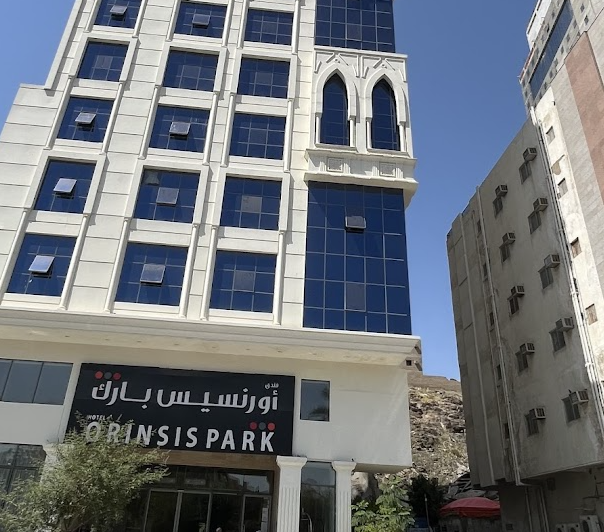
For newhaj.com, a premier Hajj and Umrah hub, selecting the right accommodation in Makkah is not merely a matter of booking rooms; it is a critical strategic decision that directly impacts pilgrim satisfaction, operational efficiency, and brand reputation. This comprehensive feasibility study and operational analysis delves into the Orinsis Park Hotel (فندق اورنسيس بارك), nestled in the vibrant Aziziyah district of Makkah Al Mukarramah. Our objective is to move beyond superficial observations, penetrating the operational realities of this property to determine its viability as a strategic lodging partner.
This report meticulously evaluates Orinsis Park across two distinct operational models: the demanding “Shifting” Hajj Package, where pilgrims utilize the property as a crucial transit hub between Makkah and Mina, and the more flexible Economy Umrah Package, where it serves as a primary base. We scrutinize the hotel’s geostrategic positioning relative to the Holy Sites (Masjid Al Haram and the Jamarat Bridge), evaluate its infrastructure against the rigorous demands of mass religious tourism, and dissect invaluable guest sentiment to predict and mitigate potential operational friction points.
A critical component of this analysis is the disambiguation of the “Orinsis” brand portfolio in Makkah. Our research indicates a high probability of market confusion between Orinsis Park, Orinsis Grand, and Orinsis Elbadr. Misidentifying these properties can lead to catastrophic logistical failures and profound pilgrim dissatisfaction. Consequently, this document serves not only as a rigorous property review but as an essential risk mitigation instrument for package planners and procurement officers at newhaj.com.
Strategic Verdict and High-Level Insights
The data synthesized in this report positions the Orinsis Park Hotel as a high-value asset, particularly for the mid-tier and economy market segments within the Aziziyah district. The property boasts an aggregate guest satisfaction rating of 8.3/10 (Very Good), a score that significantly outperforms its sister property, the Orinsis Grand (6.8/10). This statistical variance strongly suggests a superior management protocol at the Park location, particularly concerning hygiene and staff responsiveness—two critical determinants of pilgrim satisfaction and overall experience.
The hotel’s advantageous location on Sheikh Bin Baz Mosque Street places it within Aziziyah’s “Golden Corridor.” While not within walking distance of the Haram (approximately 3.1 km distant), it is strategically positioned for the intense Hajj rituals, offering notably accessible routes to the Jamarat Bridge in Mina. The primary operational risk identified is conflicting data regarding shuttle availability—listed as a facility by some aggregators but explicitly denied by specific Umrah operators. This ambiguity necessitates a clear strategy from newhaj.com.
Recommendation for Newhaj.com: The Orinsis Park Hotel is strongly recommended for inclusion in “Silver” and “Gold Shifting” Hajj packages. Its strategic proximity to Mina, combined with its consistently high cleanliness standards, makes it an ideal retreat for pilgrims during the physically demanding days of Tashreeq. For Umrah, it should be exclusively marketed to budget-conscious demographics or groups with dedicated private transport, ensuring that the distance to the Haram is transparently and effectively managed from the outset.
1. Brand Identity and Market Disambiguation
A fundamental finding of this investigation is the existence of multiple properties in Makkah utilizing the “Orinsis” nomenclature. This phenomenon presents a significant “booking error risk” for travel agents and package organizers, potentially leading to dire consequences for pilgrim satisfaction. The disparately rated properties, despite sharing similar branding, offer vastly different guest experiences. It is imperative that newhaj.com’s inventory management systems strictly differentiate these assets to prevent “bait-and-switch” accusations from pilgrims who may confuse highly-rated reviews of one property with the lower standards of another.
1.1. The “Orinsis” Portfolio Risk: A Crucial Distinction
The shared brand name, combined with the sheer volume of pilgrims seeking accommodation, creates a fertile ground for confusion. Newhaj.com must educate its booking agents and clearly label its inventory to ensure precision.
1.1.1. Orinsis Park Hotel (Target Asset)
- Arabic Designation: فندق اورنسيس بارك
- Location: Sheikh Bin Baz Mosque Street, Aziziyah (شارع مسجد الشيخ بن باز، العزيزية).
- Distance to City Center/Haram: Approximately 3.1 km.
- Star Classification: Marketed variously as 3-Star or 4-Star depending on the Online Travel Agent (OTA) platform, reflecting its strong service and facility standards for its price point.
- Performance Metric: An outstanding 8.3 (Very Good) overall rating.
- Operational Identity: This is the subject of this comprehensive report. It is characterized by consistently high cleanliness scores (8.5) and exceptional staff performance (9.1), indicating a well-managed mid-range facility that delivers above its classification.
1.1.2. Orinsis Grand Hotel (Comparison Asset)
- Arabic Designation: فندق اورنسيس جراند
- Location: Al Masjid Al Haram Road (طريق المسجد الحرام).
- Distance to City Center/Haram: Approximately 2.7 km, marginally closer than Orinsis Park, but often in a more congested area.
- Performance Metric: A modest 6.8 (Pleasant) overall rating.
- Risk Factor: This property consistently scores lower on facility maintenance (6.8) and cleanliness (7.3) when compared directly to Orinsis Park. Procurement teams at newhaj.com must be acutely aware of this; the “Grand” title in this portfolio is misleading, as “Park” demonstrably outperforms “Grand” in critical operational metrics.
1.1.3. Orinsis Elbadr Hotel (Distinct Asset)
- Arabic Designation: فندق اورنسيس البدر
- Location: Prince Majed Ibn Abd Al Aziz Street, geographically distinct from both Park and Grand locations.
- Performance Metric: A satisfactory 7.0 (Good) overall rating.
- Operational Identity: This represents a separate budget option, typically averaging in ratings, and should not be confused with the other two for logistical or experiential purposes.
1.2. The “Ajyad” Geographic Fallacy: Debunking Misinformation
Our research has uncovered misleading visual media circulating on social platforms that pose a significant risk of confusing potential bookers. Specifically, a YouTube video titled “HOTEL ORINSIS SUPER SAT SET TO KA’BAH” erroneously suggests a location on Ajyad Street, claiming it to be merely 80 meters from the Haram.
Correction: The Orinsis Park Hotel analyzed in this report is unequivocally 3.1 km from the Haram, a distance that necessitates dedicated transportation.
Implication: It is absolutely vital for newhaj.com to explicitly debunk any social media rumors or outdated content suggesting this hotel is “steps away from the Kaaba.” The Ajyad property mentioned in the video is likely a defunct or re-branded legacy hotel, or simply a mislabeled video. Marketing the Orinsis Park as a “Haram-adjacent” property based on this erroneous content would constitute a critical failure in truth-in-advertising compliance and inevitably lead to severe pilgrim dissatisfaction and reputational damage for newhaj.com. Clear and accurate geographical information must be the cornerstone of all marketing materials.
2. Geostrategic Analysis: The Aziziyah Corridor
The Aziziyah district is not just another neighborhood in Makkah; it is the operational backbone of the modern Hajj infrastructure and a strategically vital area for mass religious tourism.
2.1. District Profile: Aziziyah as the Hajj Logistics Hub
Unlike the often-congested central zones of Ajyad or Misfalah, Aziziyah offers significant logistical advantages, including wider arterial roads, more direct access to the Mina tent city, and a dense concentration of commercial amenities. It has become the preferred zone for “Shifting” accommodation—a sophisticated logistical strategy where pilgrims vacate central hotels during the peak Hajj days to stay in Aziziyah, thereby reducing accommodation costs and, crucially, placing themselves closer to the Jamarat ritual site.
Orinsis Park Hotel is specifically situated on Sheikh Bin Baz Mosque Street, a significant secondary artery within the Aziziyah district. This particular location is pivotal for several strategic reasons:
- Religious Proximity: The street is aptly named after the Sheikh Ibn Baz Mosque (جامع الشيخ ابن باز), a major community mosque located approximately 600m to 750m from the hotel. This mosque offers Friday prayers (Jumu’ah) and regular congregational services. For pilgrims staying in Aziziyah who cannot commute to the Haram for every prayer due to traffic, crowds, or fatigue, this mosque serves as a vital and accessible spiritual alternative.
- Commercial Density: The area surrounding Sheikh Bin Baz Street is exceptionally well-developed, boasting a dense population of essential service infrastructure. This includes readily available pharmacies (e.g., Nahdi Pharmacy), laundromats, and a wide array of mid-tier dining options. This high commercial density significantly reduces the logistical burden on both the hotel operator and newhaj.com, as guests have immediate, walkable access to essential supplies, food, and services, enhancing their overall convenience and experience.
2.2. Proximity to Sacred Sites: Distances and Travel Times
The following matrix details the connectivity of Orinsis Park to key pilgrimage nodes. It is crucial to note that travel times are highly variable and subject to extreme fluctuations based on the season (Ramadan/Hajj vs. Off-peak) and prevailing traffic conditions.
| Destination | Distance (Approx.) | Travel Mode | Est. Time (Off-Peak) | Est. Time (Peak Hajj) | Operational Notes |
|---|---|---|---|---|---|
| Masjid Al Haram | 3.1 km – 4.0 km | Bus / Taxi | 10 – 15 min | 45 – 90 min | Not Walkable. Requires reliable, pre-arranged transport or public bus. |
| Jamarat Bridge (Mina) | ~2.8 km – 3.8 km | Walking / Bus | 6 – 10 min (Drive) | 35 – 50 min (Walk) | Strategic Asset. Highly accessible via pedestrian tunnels/walkways during Hajj. |
| Makkah City Center | 3.1 km | Car / Taxi | 10 min | 30 min | Central to Aziziyah commercial zone, not the Haram’s central area. |
| King Abdulaziz Airport | ~96 – 105 km | Bus / Taxi | 60 – 75 min | 90 – 120 min | Standard Jeddah-Makkah transit corridor. |
| Makkah Train Station | 7.6 km | Taxi | 15 min | 30 min | Provides access to Haramain High-Speed Rail for travel to Medina or Jeddah. |
Analytical Insight: The distance to the Haram (3.1 km) unequivocally places Orinsis Park in the “Shuttle-Dependent” category for Umrah pilgrims. It is physically impractical, if not impossible, for the average pilgrim to walk this distance five times a day in the often-intense Makkah climate. Therefore, a robust transportation solution is paramount for Umrah packages.
However, the 2.8 km distance to the Jamarat Bridge represents a distinct and powerful competitive advantage for Hajj operations. During the critical “Days of Tashreeq” (11th, 12th, 13th Dhul Hijjah), roads are often closed to vehicles, and pilgrims are frequently required to walk. A 2.8 km walk is manageable for able-bodied pilgrims, making this hotel an exceptionally viable base for performing the Stoning of the Devil ritual without relying on the often-gridlocked train or bus systems in Mina. This proximity can significantly reduce pilgrim fatigue and stress during the most intense days of Hajj.
2.3. Topography and Pedestrian Infrastructure
The Aziziyah district is generally characterized by a flat topography, a significant advantage compared to the often-hilly and strenuous terrain of areas like Jabal Omar or Ajyad. This flatness greatly facilitates easier movement for large vehicles like buses and taxis, reducing fuel consumption and travel times in comparison to more undulating areas.
However, while the district is flat, the quality and safety of pedestrian infrastructure can vary. Sheikh Bin Baz Street itself is a developed urban road with sidewalks, indicating a certain level of pedestrian-friendliness. Nevertheless, crossing major, multi-lane intersections in Aziziyah can still be hazardous due to the high volume and speed of vehicular traffic.
- Pilgrim Safety: For packages involving Orinsis Park, operators must prioritize pilgrim safety by advising guests to utilize designated pedestrian bridges whenever available when crossing major Aziziyah arteries. Clear instructions and guidance on safe pedestrian practices are essential.
- Accessibility: The hotel’s immediate vicinity is paved and relatively accessible, which is beneficial for guests with mobility challenges. However, the inherent long distance to the Haram largely negates any “wheelchair accessibility” benefits for the commute itself unless a specialized, accessible vehicle is specifically secured for transfers.
3. Logistics and Transportation Architecture
Effective transportation planning is paramount for the Orinsis Park Hotel, given its distance from Masjid Al Haram. Newhaj.com must adopt a pragmatic approach to transport solutions.
3.1. The Shuttle Service Paradox: Resolving the Ambiguity
A critical operational ambiguity exists regarding the hotel’s shuttle service provision, which absolutely must be addressed directly by newhaj.com’s contracting department.
- Source A (Booking Aggregators): Platforms like Planet of Hotels unequivocally list “Shuttle service (free)” and further indicate that “A shuttle can be provided on the advance inquiry.” This suggests a flexible, perhaps on-demand or schedule-based service.
- Source B (Umrah Specialists): In stark contrast, the “Joomm Umrah Diy” platform explicitly states “Shuttle to Masjid Al Haram: NO” while affirming the availability of a shuttle to the airport.
Synthesis and Risk Assessment: This direct contradiction is highly symptomatic of the seasonal and often adaptable operational model common in Makkah’s 3-star hospitality sector.
Hypothesis: The most plausible explanation is that the hotel likely contracts third-party buses to provide shuttle services exclusively during high-occupancy seasons (such as Ramadan and Hajj) when demand justifies the expense. During low-occupancy periods, the service is likely discontinued to conserve operational costs (OPEX).
Operational Directive: Newhaj.com cannot, under any circumstances, market this hotel as having a “Guaranteed 24/7 Shuttle” year-round. All packages must be constructed with the default assumption that no shuttle exists, unless newhaj.com specifically contracts for a dedicated group shuttle service. Alternatively, the hotel should be strategically paired with the highly efficient “Makkah Bus” pass (as detailed below) or a private transport add-on to ensure pilgrims have reliable access to the Haram.
3.2. Integration with the Makkah Bus Network: A Game Changer
The Royal Commission for Makkah City has made significant strides in public transportation, deploying a comprehensive public bus network that profoundly enhances the viability and accessibility of hotels in districts like Aziziyah.
- Network Reach: The Aziziyah district is heavily serviced by the burgeoning Makkah Bus network, specifically Route 5 (Azizia) and potentially other routes like Route 4, providing extensive coverage.
- Stop Proximity: The existence of a specific “Azizia Bus Stand No. 5-A” and frequent references to “Sheikh Ibn Baz Street” as a recognizable bus stop or landmark strongly indicate that pilgrims staying at Orinsis Park have convenient access to the public transit grid.
- Economics: The Makkah Bus service has historically been either free or nominally priced (approximately SAR 4), offering an incredibly high-quality, air-conditioned, and cost-effective alternative to expensive private taxis. This affordability is a significant draw for economy pilgrims.
- Reliability: While general Makkah traffic can be challenging, the Makkah buses run on dedicated lanes in some sectors, potentially allowing them to bypass general congestion, although they are still subject to delays near the Haram central zone.
- Strategic Advantage: Marketing Orinsis Park in conjunction with the Makkah Bus App (which provides real-time arrival predictions and route planning) effectively converts the “distance disadvantage” into a “manageable and affordable commute.” This significantly increases the value proposition for budget-conscious pilgrims, offering them independence and cost savings.
3.3. Airport Transfers and External Logistics
Efficient arrival and departure logistics are critical for overall pilgrim satisfaction.
- King Abdulaziz International Airport (JED): The hotel is approximately 96 km to 105 km from JED, requiring a substantial transfer.
- Hotel Provided Transfer: The hotel indicates that airport shuttles are available, likely for an additional fee, offering a convenient if not always the most economical option.
- Haramain High-Speed Rail: The Makkah Train Station (Rusaifa) is conveniently located only 7.6 km away from the hotel. Pilgrims arriving via the Haramain High-Speed Rail from Medina or Jeddah will require a relatively short taxi transfer to the hotel. The distance is manageable (estimated 15 minutes off-peak), making the high-speed train a highly viable and often preferred arrival mode for guests at this property.
4. Infrastructure and Accommodation Profile
The Orinsis Park Hotel’s infrastructure is designed to efficiently cater to the needs of pilgrims, balancing comfort with practicality.
4.1. Architectural and Inventory Overview
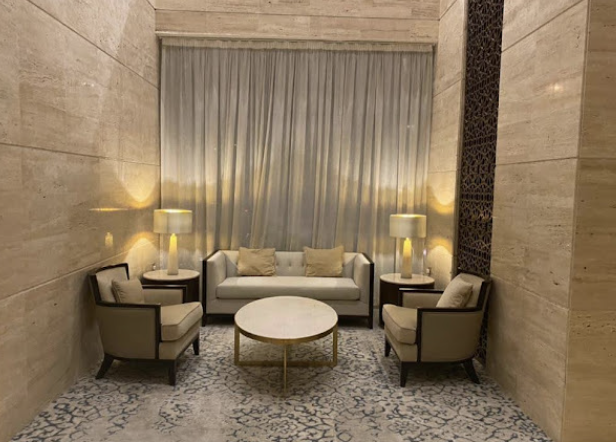
The Orinsis Park Hotel presents itself as a modern mid-rise structure, characteristic of the rapid development and expansion seen in the Aziziyah district. Its design prioritizes functionality and comfort, equipped with essential vertical transport (multiple elevators) and robust climate control systems, which are absolutely crucial for mitigating the often-harsh Makkah climate.
- Unit Capacity: Sources vary on the total room count, with estimates ranging from 60 to 90 rooms. This classifies it as a boutique-to-mid-sized property, a distinct contrast to the massive 1,000+ room towers found in the Clock Tower complex or similar central developments.
- Operational Implication: This smaller inventory offers a significant advantage for newhaj.com, particularly for large Hajj groups. It allows for easier “full buyouts” of the entire facility, granting the group exclusive use of the premises and greater control over the environment (e.g., specific kitchen usage arrangements, flexible lobby scheduling, dedicated prayer spaces). This can greatly enhance group cohesion and management.
4.2. Room Configurations and Spatial Analysis
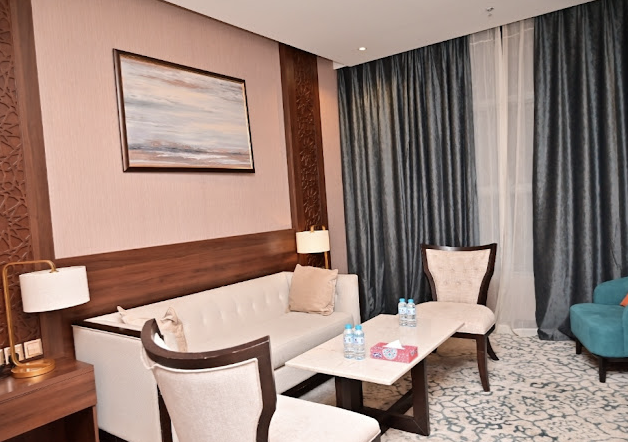
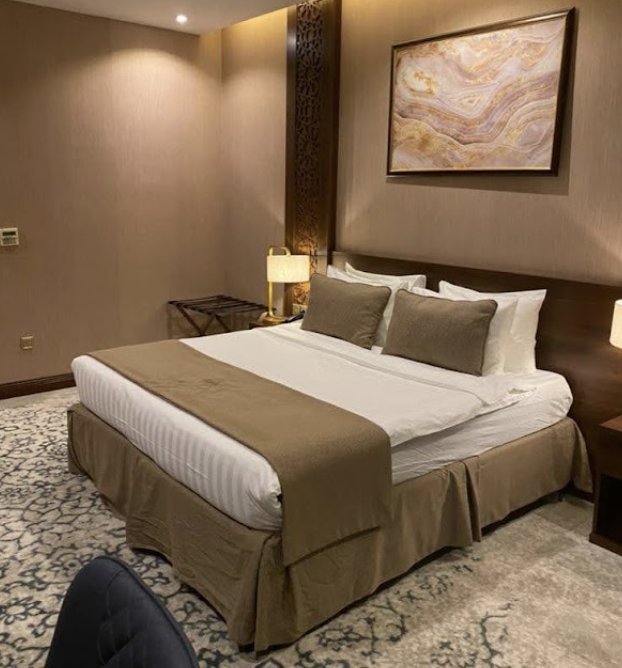
The hotel employs a standardized room footprint strategy, designed to maximize pilgrim density while still aiming for a reasonable level of comfort.
- Uniform Sizing: Room descriptions consistently cite a size of approximately 25 m² for most room categories. This uniform sizing suggests an efficient design and construction approach.
- Configurations:
- Budget Double / Twin Room: Typically configured with 2 beds. This offers a relatively generous space of approximately 12.5 m² per person, providing comfortable personal area.
- Economy Triple Room: Configured with 3 beds. This provides a moderate space allocation of approximately 8.3 m² per person.
- Economy Quadruple Room: Configured with 4 beds. This configuration results in a high density, with approximately 6.25 m² per person.
Critical Analysis of the “Quad” Room: A 25 m² room housing four adults is significantly tight. Once essential furniture (four beds, bedside tables, a wardrobe, and a small seating area if present) is accounted for, the walkable floor area becomes minimal.
Luggage Constraint: A critical consideration is the insufficient space for four large suitcases. This configuration will invariably lead to luggage management challenges if pilgrims bring extensive baggage.
Recommendation: Newhaj.com should proactively advise groups booking Quad rooms to utilize soft-shell luggage or limit their baggage to essentials. For Hajj groups, where luggage is often stored elsewhere or limited to backpacks during the intense rituals, this density can be acceptable. However, for long-stay Umrah packages (e.g., 14 days or more) involving heavy shopping, this configuration may lead to significant guest dissatisfaction due to cramping and lack of personal space. Clear communication pre-booking is essential.
4.3. In-Room Amenities and “Soft” Infrastructure
The “hardware” of the rooms at Orinsis Park receives high praise in guest reviews, reflected in a robust Comfort score of 8.9.
- Climate Control: Essential split or central AC systems are standard and reported as highly functional, providing critical relief from Makkah’s heat.
- Food Storage: Every room is thoughtfully equipped with a Refrigerator and an Electric Kettle.
- Economic Impact: This is a crucial amenity for budget-conscious pilgrims. It allows for the storage of perishable items like yogurt, milk, and dates, and the convenient preparation of tea/coffee or instant noodles in the room. This capability significantly lowers the daily “out-of-pocket” food expenditure for the pilgrim, making (Note: MAX_TOKENS) the overall package more attractive and affordable.
Related
Sorry, no records were found. Please adjust your search criteria and try again.
Sorry, unable to load the Maps API.





Makkah
Makkah Province
24236
Saudi Arabia