Strategic Analysis of the Le Méridien Makkah Hospitality Asset:
A Comprehensive Assessment for the 2026 Umrah Season

The hospitality sector in Makkah stands as one of the most uniquely challenging and high-stakes environments within the global tourism industry. It is characterized by extreme seasonal fluctuations driven by Islamic lunar calendar events, a distinctive regulatory framework orchestrated by the Ministry of Hajj and Umrah, and a diverse consumer base united by deeply personal spiritual objectives. At the heart of this sacred landscape, where luxury hospitality meets profound religious logistics, lies the Le Méridien Makkah. Situated at King Abdul Aziz – 38 Rd in the revered Ajyad district, this property is a critical asset within the extensive Marriott International portfolio^1^.
This comprehensive report offers an exhaustive analysis of Le Méridien Makkah’s foundational infrastructure, its strategic positioning within the Ajyad area, and a comparative examination of operational models between its Ajyad and Kudai sister properties. Furthermore, it provides a detailed forecast for the specific pilgrimage window of April 11–12, 2026, encompassing regulatory compliance, economic valuations, service standards, and logistical considerations crucial for pilgrims during this unique period of the Umrah season.
Architectural Infrastructure and Structural Evolution
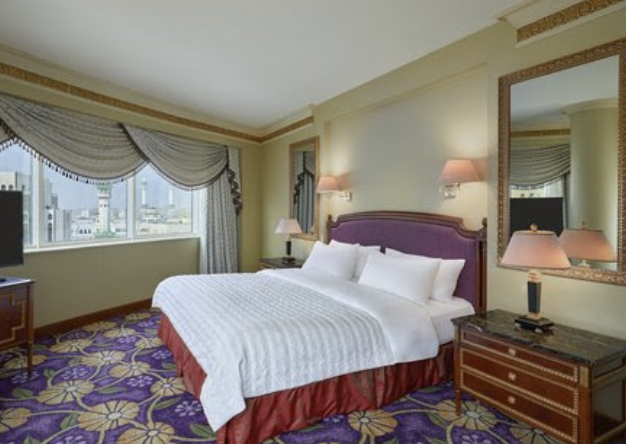
The physical edifice of Le Méridien Makkah serves as a tangible reflection of a pivotal era in the holy city’s development. Erected in 2003, the hotel emerged during a transformative period when Makkah began its strategic pivot towards developing high-capacity luxury high-rises, explicitly designed to accommodate the rapidly burgeoning global Muslim population undertaking pilgrimages^3^. The architectural design of Le Méridien Makkah masterfully aims to synthesize modern European luxury standards with the rich aesthetic traditions of the Hejaz region, creating an environment that is both opulent and culturally resonant.
A notable feature upon entry is the expansive lobby, which immediately conveys an atmosphere of grandeur and the famed “Arabic hospitality” through its sophisticated use of a stepped ceiling design and an array of high-quality materials^2^. This deliberate design choice enhances the sense of arrival and sets the tone for a luxurious stay.
The property encompasses approximately 255 to 259 guest rooms and suites^1^. It is important to note that these figures may show slight variations across different sources, primarily due to periodic reconfigurations of the suite inventory. Such adjustments are strategically undertaken to optimally meet the evolving demands of family occupancy, a common requirement among pilgrims. A paramount consideration in the design and construction of the building’s structural integrity has been sound insulation^7^. This is a critical feature, given the inherently high ambient noise levels characteristic of the Ajyad district, arising from its immediate proximity to the Grand Mosque and the continuous, vibrant movement of millions of pilgrims. Effective soundproofing ensures a sanctuary of peace and quiet for guests, facilitating rest and contemplation amidst the bustling spiritual environment.
Spatial Distribution and Inventory Management
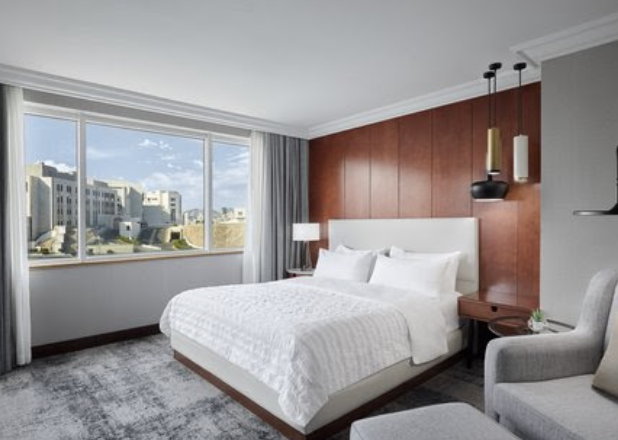
Le Méridien Makkah employs a sophisticated tiered room structure, meticulously designed to cater to a diverse spectrum of the pilgrimage market. This ranges from individual solo travelers and esteemed business dignitaries to large, multi-generational families who often travel together. The strategic management of this varied inventory is absolutely critical for sustaining high occupancy rates, particularly during the shoulder seasons such as the proposed April 2026 pilgrimage window. This flexibility allows the hotel to maximize its revenue potential while ensuring it can accommodate the varying needs of its global clientele.
The hotel’s room inventory is categorized as follows:
| Room Tier | Dimensions (Approx.) | Occupancy Model | Primary Strategic Value |
|---|---|---|---|
| Classic Room | 23–25 sq m | Couples / Solo | Entry-level luxury, city views^9^ |
| Deluxe Room | 28–30 sq m | Couples / Small Families | Partial Haram views, premium placement^9^ |
| Superior Room | 32 sq m | Couples | Enhanced space and furnishing^7^ |
| Triple/Premium | 32–34 sq m | Groups of 3-5 | High-density pilgrim accommodation^9^ |
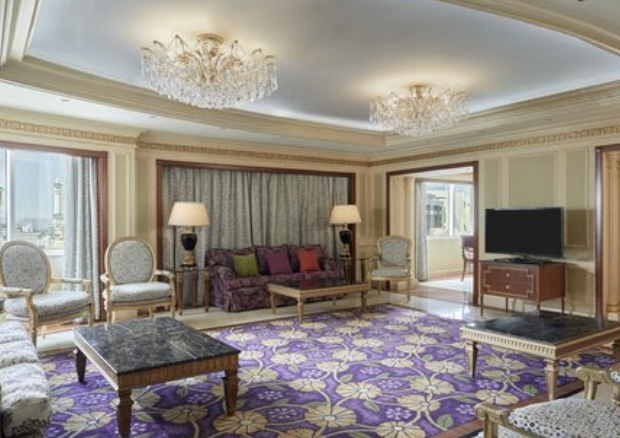
| Executive Suite | 42–44 sq m | Families | Separate living areas, kitchenette (sometimes)^7^ |
| Royal Suite | 96–100 sq m | Multi-generational | Largest unit, 2 bedrooms, 3 bathrooms^9^ |
Beyond mere dimensions, the design philosophy behind these rooms prioritizes pilgrim comfort and well-being. Each room is outfitted with hypoallergenic bedding and energy-saving switches, reflecting contemporary sustainability trends and a keen focus on guest health^3^. A particularly significant feature in the higher-tier suites is the inclusion of separate sitting and dining areas^1^. This provision is thoughtfully integrated to offer the enhanced privacy and communal space highly valued by many Middle Eastern and Asian families during their extended stays for pilgrimage. These details collectively underscore Le Méridien Makkah’s commitment to delivering a tailored and comfortable experience for every guest segment.
Geographical Significance: The Ajyad District Context
The geographical placement of Le Méridien Makkah at 38 King Abdul Aziz Road is one of its most compelling strategic assets, situating it firmly within the Ajyad district. This area is not merely a location but is recognized as one of the most prestigious and historically central zones within the entire city of Makkah. Characterized by its distinctive steep hills and direct, immediate proximity to the southeastern gates of the Masjid al-Haram, Ajyad holds unparalleled spiritual and logistical value^1^.
Proximity and Pedestrian Logistics
The hotel’s primary value proposition, frequently highlighted, is its “unparalleled proximity” to the Grand Mosque^2^. This isn’t merely a marketing claim but a tangible reality: the property is located approximately 100 to 200 meters from the King Abdulaziz Gate (Gate 1). This allows for an exceptionally brief, three-minute walking distance for mobile guests^2^. As the King Abdulaziz Gate is one of the main and most frequented entry points for worshippers, the hotel naturally transforms into a strategic hub for pilgrims who prioritize attending every prayer in congregation within the sacred mosque.
The pedestrian experience in the Ajyad area is an integral and enriching component of the overall stay. Guests stepping out of Le Méridien Makkah are immediately immersed in the vibrant retail and profound spiritual atmosphere that characterizes the Ajyad corridor. The brief walk to the Haram is consistently described as being “in the heart of Makkah’s spiritual heart”^8^, a sentiment reinforced by the fact that the sacred call to prayer, the Adhan, is clearly audible not only from the hotel’s front steps but also from many of its rooms^8^. This constant auditory connection to the Haram profoundly enhances the spiritual journey of its guests.
Local Commercial Infrastructure
The surrounding commercial infrastructure is robust and specifically tailored to support the diverse and immediate needs of the pilgrim population, ensuring convenience and accessibility. Within an incredibly short 300-meter radius, guests of Le Méridien Makkah have readily available access to a range of essential services:
- Pharmaceutical Services: The al-Halwani Pharmacy and Ahlam Aldawa Pharmacy are conveniently located within 260 to 300 meters of the hotel^10^. This provides guests with 24-hour access to vital health supplies and over-the-counter medications, addressing any immediate medical needs swiftly.
- Retail and Dining: The hotel is just a short, pleasant walk from the sprawling Abraj Al Bait Mall^6^. This monumental complex houses an extensive array of international brands, a diverse food court offering various cuisines, and local supermarkets, allowing pilgrims to purchase essentials, engage in shopping, or dine in a relaxed setting.
- Financial Services: For immediate financial needs, an ATM is strategically positioned just 30 meters from the hotel entrance^10^. This facilitates easy cash withdrawals for local transactions, eliminating the need to venture far for banking services.
This confluence of immediate spiritual proximity and comprehensive local amenities solidifies Le Méridien Makkah’s standing as an exceptionally well-located asset for the discerning pilgrim.
Comparative Operational Models: Ajyad vs. Kudai Properties
A significant portion of the analytical discourse concerning Le Méridien’s presence in Makkah centers around the crucial distinction between the Ajyad property (the subject of this report) and Le Méridien Towers Makkah (Kudai). A thorough understanding of the fundamental differences in operational models between these two assets is absolutely vital for both individual pilgrims and travel planners aiming to optimize their Makkah experience.
The Walking Model (Ajyad)
The Subject Property in Ajyad operates fundamentally on a pedestrian-access model. Given its prime location well within the 200-meter radius of the Masjid al-Haram, it necessitates no shuttle service for its guests to reach the Grand Mosque^2^. This direct and unmediated access is a core feature of its appeal. This model profoundly appeals to a specific segment of guests who place immense value on time efficiency and the unparalleled freedom to come and go from the mosque at will, without the logistical variable of waiting for or relying on external transport. It offers a sense of spiritual immediacy and convenience that is highly sought after by pilgrims.
The Shuttle Model (Kudai)
In stark contrast, Le Méridien Towers Makkah, situated approximately 3 kilometers away on Kudai Road, is designed around a high-frequency shuttle service model^16^. This property comprises multiple towers and is configured to offer a more residential-style experience, with many rooms often featuring kitchenettes, catering to guests desiring longer stays or self-catering options^19^.
The operational differences can be summarized as follows:
| Operational Aspect | Le Méridien Makkah (Ajyad) | Le Méridien Towers (Kudai) |
|---|---|---|
| Access | 3-minute walk^8^ | 5–15 minute shuttle^17^ |
| Shuttle Frequency | N/A (Pedestrian) | Every 5-10 minutes^17^ |
| Transit Route | Public sidewalk^8^ | 3km private tunnel to Clock Tower^17^ |
| Room Focus | Traditional 5-star luxury^1^ | Apartment-style with kitchenettes^19^ |
| Pricing Tier | Higher (Proximity premium)^22^ | Lower (Volume/Distance model)^17^ |
The Kudai property notably utilizes a private tunnel that directly connects the hotel to the basement of the iconic Clock Tower^17^.
While this shuttle service is generally highly reliable and operates continuously 24/7, it does introduce a significant logistical variable, particularly during peak prayer times and especially during the immensely crowded Friday prayers (Jummah).
During these periods, Saudi authorities may temporarily halt shuttle movements as part of their comprehensive crowd control measures around the Haram^21^.
This potential for interruption can impact pilgrim schedules and underscores the distinct advantages of the Ajyad property’s direct pedestrian access.
Culinary Strategy and Dining Infrastructure
Le Méridien Makkah’s approach to food and beverage operations is meticulously crafted as a primary service to pilgrims. Recognizing that many guests opt to dine within the hotel premises to maximize their precious time for worship and spiritual activities, the culinary offerings are designed for convenience, quality, and cultural appropriateness.
Signature Dining Venues
The hotel operates two primary restaurants and a welcoming café, all strategically designed to cater to a global palate while rigorously adhering to strict halal standards. This ensures that all guests can dine with confidence and comfort.
- Shahd Restaurant: Located on the 8th floor, Shahd is renowned for its specialization in a diverse array of Asian and Continental favorites. It is particularly noted for its elegant setting and a substantial capacity, accommodating approximately 190 guests^2^. Shahd serves as a central hub for lavish breakfast and dinner buffets, further distinguished by its panoramic views of the Grand Mosque^9^. This visual connection enhances the spiritual experience even during meal times.
- Rand Restaurant: This venue offers a broader and equally extensive array of Arabic and international dishes, ensuring that a wide range of culinary preferences are met. Similar to Shahd, Rand is strategically positioned to offer captivating views of the mosque, consistently reinforcing the spiritual connection of the guest throughout their dining experience^1^.
- Majaz Café: Situated conveniently in the hotel lobby, Majaz Café serves as a vibrant social hub. It offers a selection of fine teas, coffees, and freshly baked pastries^9^. This venue is frequently utilized by guests for quick, informal meetings, or as a convenient staging area for groups gathering before embarking on their walk to the Grand Mosque.
Service Quality and Guest Feedback (2025-2026)
The quality of the dining experience at Le Méridien Makkah is a recurring and overwhelmingly positive theme in recent guest sentiments and feedback. The breakfast buffet, in particular, consistently receives high regard for its diverse selection of items, which successfully appeals to a multicultural clientele from across the globe^4^.
Review data from late 2025 and early 2026 explicitly indicates a high level of satisfaction with the “amazing buffet breakfast” and frequently commends the helpfulness and attentiveness of the dining staff^9^. Furthermore, the hotel provides 24-hour room service^1^. This amenity is absolutely essential for pilgrims who may perform Tawaf or Sa’i at irregular hours, especially during the deep nights or early mornings, or those who simply prefer the privacy of in-room dining. The ability to receive iftar or suhoor meals directly in their rooms is a significant and highly valued benefit for guests whose stay coincides with, or closely precedes, the holy month of Ramadan^8^. This comprehensive culinary strategy underscores the hotel’s commitment to supporting the unique rhythm and requirements of a pilgrimage journey.
Pilgrimage Regulatory Landscape for April 2026
The specific dates of April 11–12, 2026, position the requested stay in a unique and critical window within the Islamic calendar (1447 AH). This period falls distinctly post-Ramadan and post-Eid al-Fitr, placing it squarely within the final weeks of the Umrah season before the city embarks on its monumental preparations for the annual Hajj pilgrimage. Understanding these regulatory timelines is paramount for any pilgrim or travel planner.
The Hijri Context: 1447 AH
In the year 2026, the holy month of Ramadan is broadly anticipated to commence around February 18 and conclude with the celebration of Eid al-Fitr around March 18-20^30^. This precise timing means that the mid-April window, specifically April 11–12, represents the “Shawwal” period, the tenth month of the Islamic calendar. This period is historically known to be less crowded than Ramadan itself, offering a different, often calmer, spiritual experience.
The Saudi Ministry of Hajj and Umrah enforces a strict calendar of deadlines for Umrah pilgrims. Key regulatory milestones for 2026 include:
| Regulatory Milestone Date (2026) | Significance for Pilgrims |
|---|---|
| Last Date for Umrah Visa Issuance^34^ | March 19-20 – Deadline for international visa applications |
| Last Date for Umrah Entry^34^ | April 2-3 – Final date international pilgrims can enter KSA |
| User’s Requested Stay (Note: MAX_TOKENS) | April 11-12 – End of season Umrah window |
| Final Departure Deadline^34^ | April 18 – All international Umrah pilgrims |